2-18-11
OSU-recommended vegetables provide best yields in local gardens
By Judy Scott, 541-737-1386, judy.scott@oregonstate.edu
Sources: Annie Chozinski, 541-737-8959, chozinsa@hort.oregonstate.edu
Jim Myers, 541-737-3083, myersja@hort.oregonstate.edu
CORVALLIS, Ore. — Vegetable varieties and melons recommended by Oregon State University for 2011 are adapted to local growing conditions to produce the best yields in home gardens. The OSU Extension Service recommends the updated varieties listed here for all areas of the state except regions indicated.
"We look at these varieties at least two years before we can make recommendations," said Annie Chozinski, faculty research assistant with the horticulture department at OSU.
"Some we consider for many years, especially if they vary from year to year,” she said. “We observe and measure many traits, but it's the overall score that helps us decide. If something has high scores in everything but succumbs to disease pressure, it is not recommended. Similarly, if something is highly disease resistant but has odd flavors, size or variability, we don't recommend it."
Regions:
I. Oregon coast: cool but long season of 190 to 250 days.
II. Western valleys: 150-250 day season; warm days, cool nights; length of season may very considerably from year to year.
III. High elevations: short growing season of 90 to 120 days; frost possible in any month.
IV. Columbia and Snake River valleys: 120- to 200-day season; hot days, warm nights, length of season fairly well defined.
Recommended varieties:
Artichoke
(not regions III and IV) Green Globe, Imperial Star, Emerald.
Asparagus
Mary Washington, Jersey Knight, Jersey Giant, UC 157, Purple Passion.
Beans
(green bush) Tendercrop, Venture, Slenderette, Oregon 91G, Oregon Trail, Provider, Jade, Oregon 54.
(flat Italian) Roma II.
(French filet) Nickel, Straight ‘N Narrow.
(green pole) Blue Lake, Kentucky Wonder, Romano, Cascade Giant, Kentucky
Blue, Oregon Giant.
(wax bush) Goldenrod, Goldrush, Indy Gold, Slenderwax.
(lima, bush, large seeded) Fordhook 242 (or any Fordhook).
(lima, bush, small seeded) Thorogreen, Baby Fordhook, Jackson Wonder.
(dry) Pinto, Red Kidney, White Kidney (Cannellini), Cranberry, Etna.
(edible Soybeans or Edamame) Envy, Early Hakucho, Butterbean, Sayamusume, Misono Green.
Beets
Ruby Queen, Red Ace, Kestrel, Early Wonder, Pacemaker III, Detroit Dark Red, Red Cloud.
(cylindrical) Cylindra, Forono.
(golden) Golden.
(novelty) Blankoma, Chioggia.
(greens) Early Wonder Tall Top, Bull’s Blood.
Broccoli
Premium Crop, Packman, Arcadia, Early Dividend, Windsor, Emerald Pride, Gypsy.
(Romanesco type) Romanesco, Veronica.
Brussels Sprouts
Jade Cross "E", Oliver.
Cabbage
(early) Parel, Primax, Farao, Tendersweet, Gonzales, Surprise.
(main season) Golden Acre, Bravo, Charmant, Cambria, Invento.
(late fall, winter) Danish Ballhead, Storage Hybrid #4, Blue Thunder.
(red) Ruby Perfection, Red Acre.
(savoy) Melissa, Savoy Express, Savoy Ace, Perfection, Famosa.
Chinese cabbage
Michihili, Monument, China Express.
Pac choi: Mei Qing Choy, Joi Choi.
Carrots
Red Core Chantenay, Royal Chantenay, Scarlet Nantes, Mokum, Bolero, Apache, Danvers, Sugarsnax 54, Nelson, Napa, Kuroda, Nantindo, Magnum, Navarino, Sweetness III, Napoli, Yaya, Vitana, Skywalker.
(yellow) Yellowstone.
(white) White Satin.
(purple) Purple Haze.
(baby carrots) Minicore, Parmex, Thumbelina.
Cauliflower
Snowball "Y" Improved, Snow Crown, Candid Charm, Apex, Amazing.
(Purple) Violet Queen, Graffiti.
(green) Panther.
(Romanesco type) see Broccoli.
Chard
Fordhook Giant, Rhubarb, Bright Lights, Bright Yellow, Silverado, Broadstem Green.
Chicory
(green) Crystal Hat (tall, slender heads).
(red, also known as Radicchio) Chiogga Red Preco, Palla Rosa Special, Indigo, Treviso (tall, slender heads).
Celery
Utah 52-70R, Tango.
Celeriac: Brilliant, Diamont.
Collards: Vates, Champion, Flash.
Corn
Yellow Kernels
Standard sweet (early): Sundance, Early Sunglow, Seneca Horizon.
(main season): Jubilee (also called Golden Jubilee).
Supersweet (early): Butterfruit.
(main season): Supersweet Jubilee.
Sugary enhanced (very early): Sugar Buns.
(early): Precocious, Spring Treat.
(main season): Incredible, Kandy King, Kandy Korn, Legend, Bodacious.
White Kernels (must be isolated from yellow or bicolor types to get all white kernels).
Supersweet (main season): How Sweet It Is, Xtratender 378A, Mirai 421W.
Sugary enhanced (early): Sugar Pearl
Sugary enhanced (main season): Argent, Whiteout, Silver Princess.
Bicolor Kernels
Supersweet (early): Xtratender 272A, Mirai 308BC.
(main season): Honey and Pearl, Xtratender 277A.
Sugary enhanced (early): Trinity, Fleet.
(main season): Temptation, Brocade, Delectable, Mystique.
Triple Sweet types (sh2su hybrids): Sweet Rhythm, Serendipity, Sweet Chorus,
Nantasket, Renaissance.
Ornamental
(must be isolated from other corn): Wampum, Chinook.
Note: Kernel quality of all the above corn varieties may be dramatically altered under certain pollination conditions. Supersweets must be isolated from other types.
Cucumbers
(pickling) SMR 58, Pioneer, Bush Pickle, County Fair, Clinton, Cool Breeze, Regal, Vertina.
(slicing) Burpee Hybrid, Marketmore 86 & 97, Poinsett, Raider, Dasher II,
Slicemaster, Intimidator, Tasty Green, Orient Express, Genuine, Sweet Marketmore, Tasty Jade.
(novelty) Armenian, Lemon.
Eggplant
(not regions I, III) Dusky, Epic, Bambino (round), Cloud Nine, Calliope, Burpee Hybrid, Millionaire, Classic, Lavender Touch (white with lavender blush), Dancer (violet).
(elongated) Megal, Bride, Orient Express.
Endive
Green Curled, Batavian, Salad King, Neos.
Gourds
(ornamental) Harrowsmith Select, Little Guys Mix, Corsican, Turk’s Turban, Aladdin, Large Bottle, Goblin Eggs, Autumn Wings.
Kale
Dwarf Blue Curled Scotch, Improved Vates, Siberian, Winterbor, Winter Red, Nero di Toscana, Blue Ridge, Red Bor, Red Ursa.
Kohlrabi
Early White Vienna, Early Purple Vienna, Kongo, Kolibri, Eder.
Leeks
American Flag, King Richard, Kilima.
Lettuce
(heading, main season) Summertime, Ithaca.
(red leaf) Prizehead, Red Sails, Redina, New Red Fire, Merlot, Red Tide.
(green leaf) Salad Bowl, Grand Rapids, Slobolt, Pom Pom.
(oak leaf) Oaky Red Splash, Cocarde, Mascara, Blade.
(romaine) Paris Island, Valmaine, Green Towers, Outredgeous, Devils Tounge, Little Gem, Freckles.
(bibb type) Optima, Buttercrunch.
(butterhead) Esmeralda, Marvel of Four Seasons, Emerald Oak.
(batavian) Nevada, Sierra.
Melons
(not regions I and III)
(Cantaloupe/muskmelon) Ambrosia, Harper Hybrid, Gold Star, Classic, Pulsar, Superstar, Earlisweet, Primo, Fastbreak, Hannah’s Choice, Athena, Earlichamp, Sarah's Choice.
(Honeydew) Earlidew, Honey Orange.
(Galia types) Galia, Passport, Arava.
(Crenshaw types) Early Hybrid Crenshaw.
(Canary) Sugarnut.
Mustard Greens
Green Wave.
(long standing) Osaka Purple, Giant Red.
Onions
(yellow) Copra, Prince, First Edition, New York Early, Candy.
(red) Redwing, Mars.
(white) White Sweet Spanish, Superstar.
(overwintering) Walla Walla Sweet.
(green bunching) Ishikura, Tokyo Long White, He-shi-ko.
Parsley
Triple Moss Curled, Banquet, Dark Green Italian Plain.
Parsnips
Harris Model, All America, Hollow Crown, Gladiator, Andover, Cobham Improved Marrow, Javelin.
Peas
(shelling) Novella II, Oregon Trail, Oregon Pioneer, Green Arrow, Maxigolt.
(oriental edible pod) Oregon Sugar Pod II, Oregon Giant.
(snap pea, bush) Sugar Daddy, Super Snappy, Cascadia, Sugar Sprint, Sugar Ann.
(snap pea, pole) Sugar Snap or Super Sugar Snap (virus susceptible; plant early).
Peppers
(sweet bell, green to red) Parks Early Thickset, Camelot, Fat 'N Sassy, Ace,
Bellboy, Jupiter, Yankee Bell, North Star, Lady Bell, King Arthur, Lantern.
(sweet bell, green to yellow) Golden Bell, Golden Summer.
(sweet bell, green to orange) Ariane, Mandarin.
(sweet bell, green to purple) Lilac Bell, Purple Beauty, Tequila.
(sweet bell, green to lavender to red) Islander.
(sweet bell, green to chocolate) Hershey.
(sweet bell, ivory to red) Ivory.
(specialty sweet types) Sweet Banana, Banana Supreme, Bananarama, Gypsy, Biscayne, Pizza, Lipstick, Apple, Paprika Supreme, The Godfather, Giant Marconi, Round of Hungary, Sweet Cayenne, Carmen, Corno di Toro Yellow.
(cayenne) Super Cayenne II, Andy, Cayenne Long Slim.
(jalapeno) Tam Jalapeno, Early Jalapeno, Conchos, Fresno, Mitla.
(paprika) Mariachi, Paprika Supreme.
(specialty hot types) Cherry Bomb, Serrano, Anaheim TMR23,
Caribbean Red Habanero, Hot Paper Lantern, Bulgarian Carrot, Aji Amarillo.
(novelty, ornamental) Marbles, Riot, Pretty in Purple.
Potatoes
(red) Red Pontiac, Norland, Red La Soda, Cranberry Red.
(white) Russet Burbank, Superior, Goldrush, Kennebec, Butte.
(yellow) Yellow Finn, Yukon Gold, Bintje, Desiree, Red Gold (red skin, yellow flesh),
Carola.
(purple) All Blue.
(fingerling) French Fingerling.
Pumpkins
(large) Jack O'Lantern, Howden, Autumn Gold, Lumina (white), Magic Lantern, Rouge Vif d'Etampes (Cinderella), Rock Star, New Rocket, Sorcerer, Charisma.
(small) Small Sugar (also called Small Sugar Pie), Orange Smoothie.
(compact vines) Tom Fox, Oz, Spirit.
(novelty and exhibition) Big Max, Dill's Atlantic Giant, Prizewinner.
(hulless seeded types) Baby Bear, Snack Jack, Trickster, Kakai.
(mini ornamental types) Jack Be Little, Wee-Be-Little, Lil Pump-ke-mon, Baby Boo.
Radish
(red) Fuego, Comet, French Breakfast, Cherry Belle, Champion, Cherriette, Crunchy Royale, Pink Beauty.
(white) Burpee White, White Icicle.
(large Japanese type) Sakurajima Mammoth.
Radicchio
see Chicory.
Rutabaga
American Purple Top, Laurentian.
Shallots
Bonilla
Spinach
(spring planted for early summer harvest) (smooth leaf) Bloomsdale Long Standing, Olympia.
(savoy) Correnta, Unipack 151, Melody, Hellcat, Butterflay.
(late summer planted for fall harvest) (smooth leaf) Oriental Giant, Bordeaux.
Squash
Summer
(yellow) Early Prolific Straightneck, Multipik, Supersett, Fancycrook, Sunray, Yellow Crookneck, Goldbar, Gentry.
(green zucchini) Ambassador, Seneca, Elite, Tigress, Aristocrat, Raven, Cashflow, Geode (round), Floridor (round).
(yellow zucchini) Gold Rush, Butterstick.
(scallop) Sunburst, Sunny Delight.
(other summer) Tromboncino (C. moschata).
Winter
(not Region 1)
(misc) Golden Delicious, Banana, Blue Hubbard.
(Buttercup/Kabocha) Sweet Meat, Sweet Mama, Ambercup, Buttercup Burgess Strain, Gold Nugget, Black Forest, Autumn Cup, Bonbon.
(Delicata) Sugar Loaf, Honey Boat.
(Acorn) Table Queen, Mesa Queen, Table Ace, Taybelle, Table Gold (orange), Cream of the Crop (white).
(Butternut) Early Butternut, Ultra, JWS 6823.
(Spaghetti) Spaghetti, Pasta, Stripetti, Small Wonder.
Sweet Potato
(not regions I, II, III) Centennial, Georgia Jet.
Tomato
(very early) Oregon Eleven.
(early) Early Girl, Oregon Spring, Santiam, Oregon Pride, Oregon Star, Siletz, Legend.
(medium) Willamette, Pik Red, Celebrity, Sunleaper, Mountain Spring, Medford, First Lady II, Big Beef.
(late) Big Boy, Better Boy, Fantastic, Bush Big Boy, BHN 444, Ramapo.
(cherry type) Oregon Cherry, Gold Nugget, Sweet Million, Cherry Grande, Sun Gold, Early Cherry, Thai Pink, Juliet, Sunsugar, Large German Cherry, Sweet Baby Girl, Orange Paruche.
(yellow) Jubilee.
(orange) Orange blossom.
(paste) Oroma, Saucy, Halley 3155, Viva Italia, Super Marzano, Macero II, Health Kick,
Classica, Olivade.
(heirloom) Brandywine (Sudduth’s Strain or potato leaf strain), Seattle’s Best of All.
Turnip
(root) Purple Top White Globe, Royal Crown, Tokyo Cross.
(greens) Shogoin.
Watermelon
(red fleshed) (not regions I, III) Crimson Sweet, Charleston Gray, Sweet Favorite, Carmen, Sweet Diane, Sweet Cheer, Verona.
(yellow fleshed) Yellow Doll, Sunshine.
(orange fleshed) New Orchid.
(red seedless) Millennium.
(ice box) Sugar Baby, Tiger Baby.
About Garden News from OSU Extension Service: The Extension Service's "Gardening Encyclopedia" web page,http://extension.oregonstate.edu/gardening/, links to a broad spectrum of information on Oregon gardening, such as news, calendars, how-to publications, audio programs, the Master Gardener program and "Northwest Gardeners e-News."


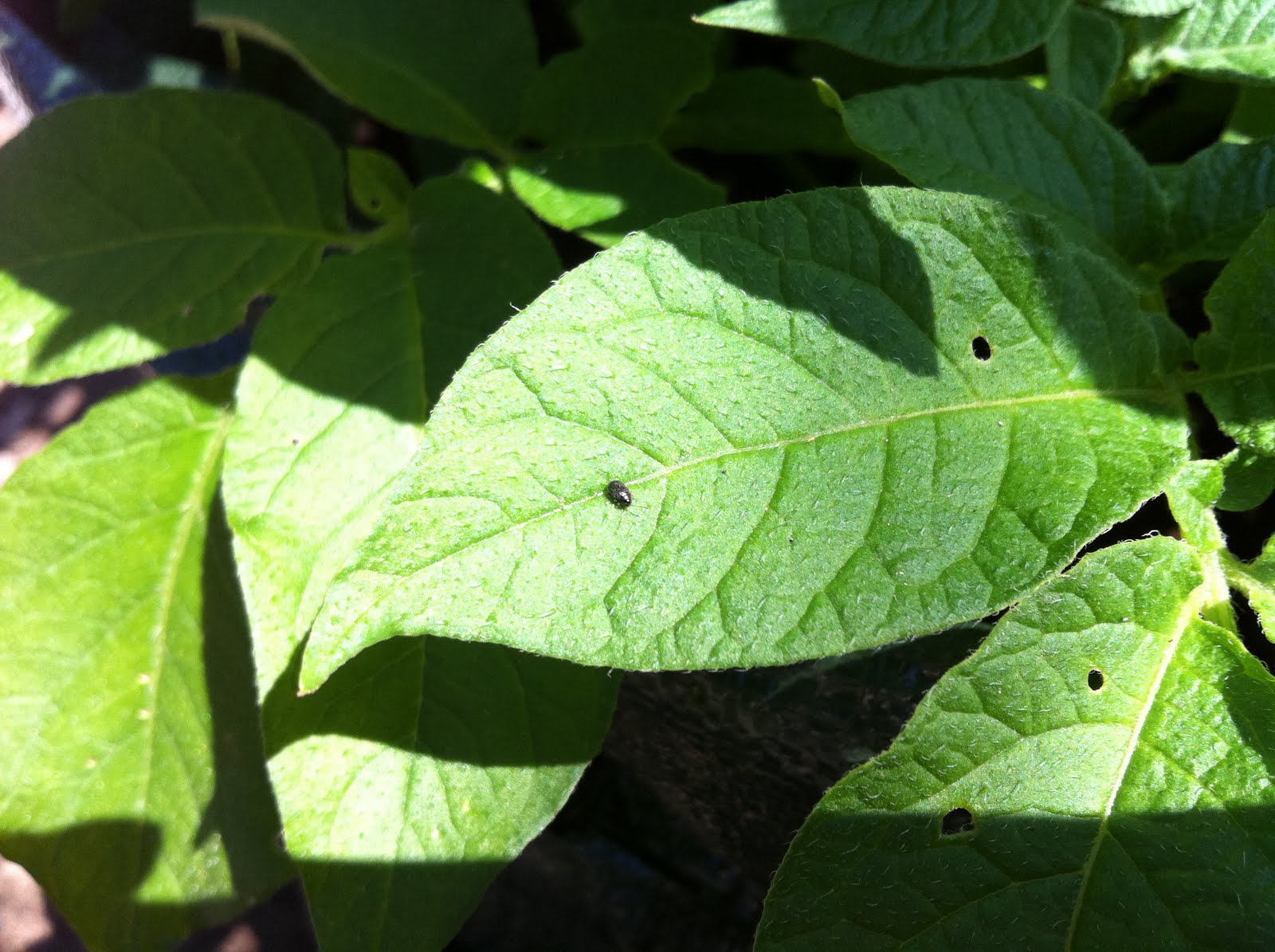 s chewed in leaves, I immediately think 'it must be a beetle'. In fact, loopers, armyworms, cutworms and grasshoppers also chew holes in leaf tissue. However, the small, tiny holes in my potatoes were a clear indication that flea beetles were to blame. Flea beetle damage has been described as a leaf looking like it has been shot with several shots from a bb gun (albeit, very small bb's). Whitney Cranshaw describes the damage as looking like the leaves have been hit by fine buckshot - but not knowing what buckshot is, I default to my past experience with bb's. This is very different than the wholesale destruction (often called 'skeletonization') caused by loopers, armyworms and cutworms. It is also different than the large 'chomps' taken from leaves by grasshoppers.
 nefits of 'popping' aphids. Squish an aphid, and you magically attract parasitoid wasps. Akin to how male flea beetles can use a plant's chemistry to attract the ladies, parasitoid wasps are able to 'smell' the chemicals that are released when an aphid is crushed. Some species of aphids release alarm pheromones when they are crushed. The alarm pheromones send a signal to nearby aphids: 'Abandon ship! We've been found! Parachute to safety, or else be eaten!'. The cool thing about alarm pheromones is that parasitoid wasps, ladybugs and other aphid enemies can hone in on a group of aphids, using released alarm pheromones as a guide (Micha and Wyss 1996). Yesterday, I crushed aphids. Today, I found parasitoids crawling all over my potatoes. A coincidence? Probably not.
 ith potato plants that are infested with flea beetles, and that also have a few aphids (the bad guys). But, these same plants have parasitoid wasps and ladybug eggs (the good guys).
